|
Department of Medical
Electronics established in the year 1996, with
a sanctioned intake of 40
students, having the student - staff ratio of
12:1.
The uniqueness of Medical Electronics branch
at DSI is its location in an integrated campus
consisting of strong interdisciplinary programs
like Biotechnology, Pharmacy, Dental Sciences,
Nursing, and Physiotherapy apart from twelve
other engineering branches and group’s
health care facility Sagar Apollo Hospital.
This Century belongs to Medical Electronics.
The society is in the midst of a major revolution
in biomedicine with stunning discoveries being
made in biological sciences and path making
inventions in the areas of physical sciences
and technology. It is expected that the practice
of Medicine will undergo a sea change.
The human genome project
has opened up new vistas in prevention, detection
and cure of human diseases with molecular precision.
If we are to play
a meaningful role nationally, and internationally,
we must be second to none in the application
of advanced technologies to the real problems
of man and society. It is well realized that,
for the benefits of modern medicine and healthcare
to reach the deprived community, who have been
denied the critical healthcare services due
to various socioeconomic and geographical reasons,
connectivity through telemedicine is an efficient
and effective method.
INTRODUCTION
Medical Electronics
engineers develop devices and procedures that
solve medical and health-related problems by
combining their knowledge of biology and medicine
with engineering principles and practices. Many
do research, along with life scientists, chemists,
and medical scientists, to develop and evaluate
systems and products such as artificial organs,
prostheses (artificial devices that replace
missing body parts), instrumentation, medical
information systems, and health management and
care delivery systems. Medical Electronics engineers
also design devices used in various medical
procedures, imaging systems such as magnetic
resonance imaging (MRI), and devices for automating
insulin injections or controlling body functions.
Medical Electronics
is a specialised discipline that advances knowledge
in Engineering and Medicine, through cross-disciplinary
activities that integrates the Engineering sciences
with the Biomedical Sciences and Clinical Practice.
Most engineers in this
specialty need a sound background in another
engineering specialty, such as mechanical or
electronics engineering, in addition to specialized
biomedical training. Some specialties within
medical electronics engineering include biomaterials,
biomechanics, medical imaging, rehabilitation
engineering, and orthopaedic engineering.
SYNERGY BETWEEN MEDICINE
AND TECHNOLOGY
The core health
care science and research in medical sciences
will have ever-increasing interface with technology
areas. The future will not only be dominated
by advances in life sciences but will witness
the merging of entire technologies and medicine.
This synergy is already happening and we should
not be caught unawares. To meet these challenges,
a new breed of medical professionals is required
which will be conversant with the medical profession
as well as the engineering profession, and who
will be able to fuse together the medical sciences
with the
high -end technologies. On a number of occasions,
this need to bring closer the scientists/ engineers
and medical professionals has arisen for specific
problems and for further advances in medical
research and more effective health care.
The students of the Medical Electronics engineering
here, have the unique opportunity to work with
health care teams of the DSI group and acquire
good theoretical and practical knowledge of
engineering, sound understanding of medical
sciences and ultimately able to combine the
two.
Department is fully geared up to cope up with
the ever happening changes. Some of the steps
taken in this direction are as follows:
Up gradation of
Departmental Labs.
Setting up of exclusive
high-end project lab.
Interaction with
Industry.
Arranging seminars
from experts from various fields.
Up gradation of
Departmental library.
Recruitment of experienced
faculty. INFRASTRUCTURE
The Medical Electronics
department has well equipped laboratories and
three classrooms in the DSI campus. Each classroom
is well furnished. Two classrooms are with LCD
projector. Staff conduct power point presentations
whenever required, regularly uses two digital
classrooms available in the Engineering Block.
Full-fledged seminar hall complexes with three
halls accommodating 160, 80 and 60 respectively.
Guest lectures are arranged in the seminar hall
located in the HERITAGE BUILDING of DSCE.
LABORATORY FACILITIES
The of Medical
Electronics department Dayananda Sagar College
of Engineering, Bangalore is well equipped with
all the components and Instruments required
for experiments to do at all times, the department
is having generator backup in case of power
failure. In all the labs all most all equipments
are tested and calibrated according to the Quality
standards. We have the following laboratories
in the department.
Analog Electronics
Lab
Digital Electronics
Lab
Microprocessors
Lab
Power Electronics
Lab
Medical Science
Lab
Advanced MP &
MC Lab
Communication Lab
DSP Lab
Biomedical DSP Lab
Digital Image Processing
Lab
Project Lab
FACULTY PROFILE
Consists of Dynamic faculty members specialized
in the field of Biomedical Engineering / Medical
Electronics, experienced from industries, teaching
field and are Research oriented.
Faculties interact closely with students, help
them in getting projects from industry and encourage
them to take up research projects.
| Faculty |
Qualification
|
Designation |
Experience |
|
Prof..M.Puttaraju |
M.Tech |
Professor
& Head |
25
years |
| Dr.Mukundrao |
PhD |
Adjunct
Professor |
35
years |
| Dr.Srinivas |
PhD |
Adjunct
Professor |
|
| Prof.T.C.L.Narayana |
M.Tech
|
Asst.Professor
|
10
years |
| Mrs.C.R.Padma |
M.Tech
|
Lecturer
|
3
years |
| Mr.Shailesh
|
M.Tech
|
Lecturer
|
3
years |
| Mrs.Archana
Murthy |
MS |
Lecturer |
2
years |
| Ms.Cebil
Thomas |
B.Tech
|
Lecturer
|
3
years |
| Mrs.Supriya |
B.Tech
|
Lecturer |
2
years |
| Mrs.R.S.Smitha |
B.Tech |
Lecturer |
2 years |
| Ms.Vijayalakshmi
|
B.Tech
|
Lecturer |
1
year |
TEACHING –
LEARNING PROCESS
1. The Department
plans well in advance the lessons to be taught,
assignments to be given, Test to be held, seminars
and Industrial visits to be organized for the
whole semester.
2. Class work is undertaken by the teaching
faculty, strictly adhering to the lesson planning
documentation prepared
and submitted to the HOD concerned, prior to
the commencement of the class work.
3. Course File is prepared well in advance.
4. Lab Manuals are prepared and made available
to staff and students.
5. Special tutorial classes are conducted in
the interest of weaker students.
6. Any work related to improvement of quality,
are taken up systematically with a will and
commitment to do.
7. Pre-final and Final year students are encouraged
to work on projects which will further help
them to add to their
knowledge already accrued in their respective
areas of study.
8. Grievances, if any are attended to and addressed
quite in advance, before they are felt and revealed.
9. Student-visits to various industries are
arranged so that they can have an opportunity
of gaining
a
hands-on-experience in terms of theoretical
concepts.
PROCTOR SYSTEM
The proctor is a very important person to mould
and develop the personality of the student under
his/her care. They must take this task sincerely
as their wise counselling can solve many problems
of the students under their care.In case student
problem warrants the interaction with the head
of the department/dean academics/principal,
the proctor should see that this is taken care
off.
It may be possible some time apart from routine
academic problems the proctor may have to act
as counsellor in solving very personnel problem
of students which they have to tackle with care.
This will go a long way in blooming
the potential of the students and make the students
worthy of being in Dayananda Sagar College of
Engineering, which is a temple of learning.
UNIVERSITY RANK HOLDERS
| Sl. No |
Name |
Reg.No |
Year |
Rank |
University |
| 1 |
Shoba
Sudarshan |
97GFEM3028 |
2001 |
7 |
Bangalore
University |
| 2 |
Auronindo
Dutta |
97GFEM3005 |
2001 |
8 |
Bangalore
University |
| 3 |
Pushpalatha.N |
97GFEM3014
|
2001 |
9 |
Bangalore
University |
| 4 |
Pradeep
Kumar |
97GFEM3015 |
2001 |
10 |
Bangalore
University |
| 5 |
Della
Verghese Koovakkattu |
1DS98ML09
|
2002 |
6
|
Visvesvaraiah
Technological University |
| 6 |
Vatsala.G. |
1DS00ML033 |
2004 |
4 |
Visvesvaraiah
Technological University |
| 7 |
Sandya
Rao |
1DS00ML021
|
2004 |
8
|
Visvesvaraiah
Technological University |
DEPARTMENTAL ACTIVITIES
AT A GLANCE
Organizing departmental
and inter-departmental student seminars
Organizing guest
lectures by eminent scientists/technocrats from
R&D organizations and industries
Organizing co-curricular
and extra-curricular activities for the students
through its students forum.
Sponsoring staff
and students for short-term courses/seminars/
workshops conducted by other institutions
Encouraging the
students for participation in the inter-collegiate
athletics and sports organized by the
university
Organizing augmentation
courses to benefit the students
Organizing in-house
job-oriented training programmer under Entrepreneurship
Development Program.
MOU with reputed
companies.
ACHIVEMENTS
(During the last 3 years)
1. Consistent good Academic
Performance.
2.100% of Passed out students are placed (includes
13 students placed
in reputed Organizations
thro’ Campus Interviews).
3. 29 Seminars (Guest lectures) were organized.
4.The Faculty attended a good numbers of Seminars/Workshops.
5. All the Final year Projects by the students
were undertaken in reputed
Organizations (like
Siemens Medicals, L&T Medicals, National
Instruments, GE Medical systems IISc. etc.).
6.A good number of students got thro’
the Competitive Exams., like GRE, TOEFL, GATE,
CAT.
7.A good number of students participated and
secured prizes in the Inter – Departmental
technical competitions.
Adip Sajjan Raj, Supriya C.P, Geetha A, Shruthy
Devendra of VIII semester participated in SRISHTI
2003, a state level project
exhibition conducted by ABVP and secured 2nd prize
for “Artificial Larynx for III World”.
Uttam Kumar B.C., Syed Mazher Zishan, Rashmi Ahmed,
Sunita Tiwari of VIII semester secured Certificate
of Appreciation for “Basic
functional communication aid for Neuro-communicatively
impaired”.
Sunita Tiwari of VIII semester participated in
SYNAPSE 2003, a technical seminar conducted by
BMSCE, Bangalore.
Adip Sajjan Raj and Supriya C.P. of VIII semester
secured 1st Prize for “Brain Ball”
in SRISHTI 2004, a state level
project exhibition conducted by ABVP in SJCE,
Mysore.
Mamatha B. and
Divya R. of VI semester participated in Technical
Paper presentation held at SIT,Tumkur on
2nd April,2005.
OPPURTUNITIES FOR GRADUATES IN MEDICAL ELECTRONICS
| Field of work |
Type of Organisation |
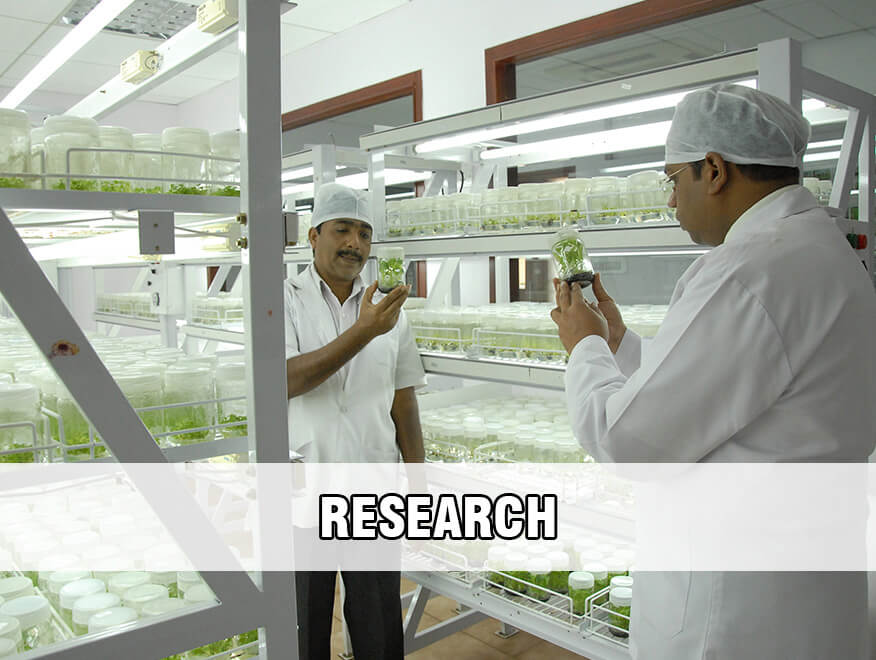
| Research |
Industrial Research
labs & there is great demand in abroad. |
| Maintenance
& Service |
Medical
Equipment dealing Industries |
| Biomedical
Engineer |
Hospitals
for Medical Equipment Maintenance |
| Application
Specialist |
Medical
Equipment dealing Industries |
| Sales & Marketing |
Medical Equipment dealing Industries |
| Production Engineering |
Medical Equipment dealing Industries |
| Medical Software Engineer |
Organizations developing
Medical Software |
| Teaching |
Colleges with Medical Electronics
& Biomedical Engineering branches. |
SCOPE OF MEDICAL RESEARCH
IN INDIA
Most of the medical
research in India has been predominantly of
clinical nature-dealing with treatment methods.
Research in fundamental areas and frontier areas
of medical science has not been stimulated due
to lack of funds, facilities, ambience and integration
between doctors and
technologists.
The research done through
this kind of collaboration between doctors and
technologists will ultimately meet the requirements
of the medical profession, and determine the
progress in the field of medicine with a long
term perspective. This will allow the country
to remain at the frontier of global advances
in medicine.
Such innovative research
in the long run will reduce imports, lead to
development of new drugs, and will be geared
towards making the country self-sufficient,
and attaining a leading role in the world. But
facilities for such kind of research are woefully
inadequate in our country, if not non-existent.
Further, the need for trained manpower in this
area was also felt for quite some time.
R&D ACROSS THE GLOBE
IN MEDICAL ELECTRONICS:
Instrumentation
& Medical devices.
Biomaterials.
Biomechanics.
Medical Imaging.
Nanotechnology.
Genetic engineering.
Cryogenics.
Bio Signal Processing.
Biosensors
THE FUTURE
The United
States Department of Labour reports that the number
of biomedical engineering jobs will increase by
31.4 percent through 2010, double the rate for
all other jobs combined. Overall job growth in
this field will average 15.2% through the end
of the decade. The U.S. Department of Labour report
attributed the rapid rise in biomedical engineering
jobs in part to an aging U.S. population and the
increasing demand for improved medical devices
and systems. Specific growth areas cited in the
report included computer-assisted surgery, cellular
and tissue engineering, rehabilitation, and orthopaedic
engineering. The
Health Care industry has been growing at a rapid
pace in the past few years. With an annual growth
rate of 30%, India is already inching closer
to Singapore, an established Medicare hub in
Asian region. The emerging emphasis on India
as a Healthcare destination has further fuelled
the rapid growth of the Healthcare Industry.
The Indian Healthcare
Industry is estimated at US$22 billion and the
Medical device market is estimated at US $ 1.85
billion and growing at 15% per annum.
Thus
with the rapid pace of growth comes the ever
increasing demand for highly skilled and well
trained Medical Electronics Engineering work
force. |