Dayananda Sagar Institutions
Untitled Document
Frameless JavaScript Tree
 
JavaScript Tree Menu

Untitled Document

Search


ELECTRONICS & COMMUNICATION ENGINEERING

The Electronics & Communication Engineering Department is imparting quality education to students to obtain a B.E degree in electronics & communication engineering from the Visvesvaraya Technological University (VTU).

E&C Graduates: Fresh graduates find openings in the Telecommunication and the Computer industry. A large majority of our graduates receive offers for employment at their pre final year of study. Students with a focus to enter higher studies enrol into the PG courses in the same department at DSCE or join one of the IITs/IISc. Quite a few go overseas for higher studies and pursue research
.

New Opportunities:
With DIGITAL REVOLUTION that has taken the world by storm, M.Tech graduates in the Digital Electronics & Communication stream have ample and challenging job opportunities in the country and outside. Bangalore city has been rediscovered for its technical prowess and has been chosen to be the hub for the silicon based Ultra Large-Scale Integrated Circuit Chip Manufacture. The M.Tech course at VLSI Technology & Embedded system is offered to produce specialists in the hardware (chip) domain, which is JUST IN TIME. Job opportunities for postgraduates are going to be very exciting and rewarding.


POST GRADUATE COURSES
Considering the excellent Teaching Learning process adopted in the Department of Electronics & Communication Engineering, the All India Council of Technical Education has approved the following Post Graduate courses to be offered to eligible B.E/B.Tech students:
1. Degree : M.Tech
  Specialisation : Digital Electronics & Communication
  Duration : 2 Years (4 semesters)
  Start : Academic year 2004-2005
  Strength : 18
       
2 Degree : M.Tech
  Specialisation : VLSI &Embedded Systems
  Duration : 2 Years (4 semesters)
  Start : Academic Year 2005-2006
  Strength : 18

Qualified and experienced professors serving as specialists in the Defence Research & Development Organisation (DRDO) and Indian Space Research Organisation (ISRO) have come into the Dayananda Sagar College of Engineering as full time faculty. Expert faculty also come from industry and VTU affiliated colleges to teach the postgraduate students. With such strong academic backing, the outcome is top class ever sought after by industry.

INFRASTRUCTURE

LABORATORY FACILITIES

  • Electronics and Communication department of Dayananda Sagar College of Engineering, Bangalore is well equipped with all the components and instruments required for experiments at all times. The labs are having continuous power supply from a generator, which is located in the campus.
  • All equipment in the labs are tested and calibrated according to defined quality standards.
  • The department has the following laboratory halls:
    1) CIRCUITS & DEVICES LABORATORY
    2) POWER ELECTRONICS LABORATORY
    3) COMMUNICATION LABORATORY
    4) MICROWAVE LABORATORY
    5) COMPUTER LABORATORY
    6) DIGITAL ELECTRONICS LABORATORY
    7) MICRPROCESSOR LABORATORY
    8) CCN & DIGITAL SIGNAL PROCESSING LABORATORY
    The E&C department has six laboratories and six classrooms in the DSI campus. Each classroom can seat 70 students. The classrooms have high-tech projection systems. E&C staff regularly uses the digital classrooms available in the Engineering Block. Guest lectures are arranged in the seminar hall located in the HERITAGE BUILDING of DSCE.


    DEPARMENTAL LIBRARY
    A well-established departmental library located in the ECE block allows students to utilise their free time effectively. The library serves as a reference section for students whereas the main library in the college campus provides them with the facility to borrow books.
    The library has a varied collection of technical books ranging from basics to higher level reference material. Starting from around 1100 volumes, the number keeps increasing every year. Passing out students also add to the collection.

    RESEARCH & DEVELOPMENT:
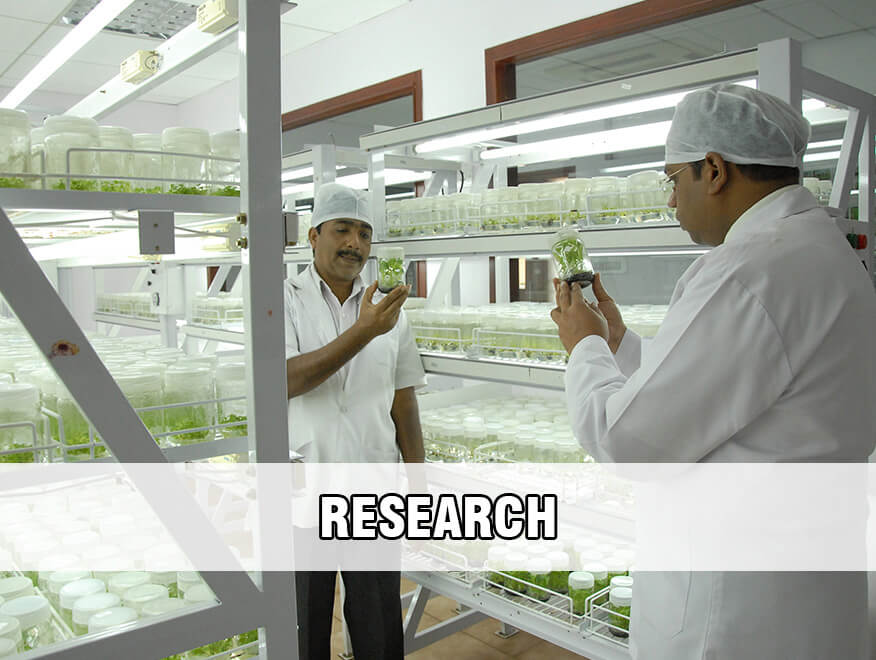
    ECE department of DSCE initiated R&D works in relevant areas of electronics, communication and nanotechnology in 2005. The department has identified emerging research areas focusing on nano materials, alternative energy sources, signal processing and neural network technologies. The department has already proposed projects in thrust areas to make fundamental contributions in the field of science and technology. A separate lab for R&D has been set up by installing advanced instruments.

    ECE department has identified thin film technology as one of the fields of research areas, which has wide applications in the field of displays, solar cells, sensors, and non-luminescent devices. The development of organic thin film transistors (OTFTs) for EL display continues for attaining flexibility and lightness unavailable in Liquid Crystal Display (LCD) designs. Basically organic TFTs are classified as optical, non-luminescent and chemical sensing devices. Optical devices are organic light emitting diodes (OLEDs) and light sensing devices. Applications include displays, flexible electronics and optical switches. Potential applications for non-luminescent devices include price tags and smart cards where their low cost and/or high flexibility make them an alternative to the existing solid-state semiconductors. Chemical sensors take advantage from interaction between odorant molecules and pi-conjugated molecules of organic semiconductors. Organic transistors on flexible substrates with operating frequencies of several Hertz can be used as electronic paper.

    Interdisciplinary research is receiving focus, combining electronics and bioengineering research on neuro computation in complex systems by doing studies on seizure types and electroencephalographic features is being initiated to construct biologically plausible neural network model that exhibits spontaneous, stochastic transitions between low activity state and high activity state by combining in vivo electrophysiology, data analysis using neural network modelling.

    The department has received internal sanction to enable research in these topics. Some major proposals on specialised areas to various scientific agencies are also in progress. A few postgraduates are being inducted to pursue research in these fields leading to a doctoral degree. Besides, some theoretical studies on simulation of different semiconductor devices are also underway. To attain innovation and leadership in research, ECE department has already formulated strategic plans such as interdisciplinary research, collaborative research with eminent labs and setting up specialised labs in thrust areas of research.

    FACULTY
    This is one of the largest departments in the college and a good number of the faculty are attending to higher education leading to doctoral/post graduation qualifications. Many of the faculty members also are put on regular training programs and work closely with industry to keep pace with the dynamics of this filed of study.

    S.No.
    Name Qualification Designation Experience
       
    Teaching/Industry
    1
    Dr. Balepur S.M. Ph.D HOD 14/20
    2
    Mr. Olaganathan M.Tech. Professor 35
    3
    Mr. Kalyanaraman M.S Professor 2.5/34
    4
    Mr. Ashwath A. R. M.Tech. M.S. (Ph.D) Asst. Professor 11
    5
    Mr. Ganesh Kumar M. T. M.Tech. M.S. (Ph.D) Asst. Professor 18
    6
    Dr. Joseph C.M. Ph.D Asst. Professor 4 / 4
    7
    Mr. Hiremath M.Tech (Ph.D) Asst. Professor  
    8
    Mrs. Roopa M. M.Tech. M.S. Senior Lecturer 11.3
    9
    Mrs. Manjula Devi T. H. M.Tech. Lecturer 16
    10
    Mr. Satish Shet K. B.E. (M.Tech.) Lecturer 5
    11
    Mrs. Shashikala M.Tech. Lecturer 17/2
    12
    Mrs. Sapna P. J. B.E. Lecturer 6
    13
    Mr. Ananda M. B.E. (M.Tech.) Lecturer 4
    14
    Mrs. Madhubashini B.E. Lecturer 2
    15
    Mr. Teekaraman M.E Lecturer 2/1
    16
    Mrs. Dhanalakshmi S. B.E. Lecturer 8
    17
    Mrs. Mythri B. B.E. Lecturer 2/1
    18
    Mrs. Poornima B.E. Lecturer 2/1
    19
    Mrs. Veena Desai B.E. Lecturer 1.5
    20
    Mrs. Muthu Rathinam B.E. Lecturer 5
    21
    Mrs. Keerti S. Pande B.E. Lecturer 1
    22
    Mr. Praveen Raj H.R. M.Tech. Lecturer 1
    23
    Mr. Kalyan Chakravarthy M.Tech. Lecturer 1
    24
    Mr. Bhaskar J. A. B.E. (M.Tech) Lecturer 1
    25
    Mrs. Hegde B.E. Lecturer 7
    26
    Ms. Smitha. H. B.E. Lecturer -
    27
    Ms. Rashmi S. Tholpady B.E. Lecturer -

    TEACHING - LEARNING PROCESS

  • The Department plans the lessons to be taught, preparation of lesson plans, assignments to be given, tests    to be held, seminars and industrial visits to be organised for the whole semester and included in the    departmental academic calendar.
  • Class notes and Lab Manuals are prepared for all the laboratories specified in syllabus.
  • Special classes are arranged for the benefit of students needing extra help and a one to one interaction with    respective lecturers.
  • Guest Lectures are arranged periodically to motivate students towards better performance in interviews and    other academic pursuits.
  • Pre-final and Final year students are encouraged to work on live projects
  • Student-visits to industry is arranged to gain hands-on-experience.
  • Experts representing Engineering and Technology, Research & Development, Placement & Communication    skills are invited to interact with and motivate the students.
  • Students are encouraged to take part in co-curricular activities like ‘Project Exhibitions’ and interact with    other institutions.
  • Course monitoring committee meets the requirements of students regarding theory and practical by taking    their feedback at regular intervals.

    INTERNAL ASSESMENT EXAMINATION

    The College has a successful centralised system for conducting internal assessment exams to ensure commonality of dates carrying 60 marks with duration of 2 hours.
    The valuation will be completed within three days after the internal exams. Three such internals exams will be conducted for each subject and the best two of three will be assessed for 25 marks .The internal assessment marks will be entered and displayed in the website: www.icris.net which contains the complete details of the internal marks and attendance of the students enabling students and parents quick access to results of internal assessment.

    Untitled Document